Table of Contents
Introduction
Spring has always been a season of renewal—longer days, softer light, and the return of green to the landscape. Across cultures and centuries, it’s a time for celebration and reflection. For many families, that means Easter. But depending on where you’re from—or who you’re gathering with—you might notice there’s not just one Easter on the calendar. There are two.
Western Easter, often celebrated by Catholics and Protestants, typically arrives in March or April. Then, sometimes a week or two later, Orthodox Christians mark Easter in their own way, with midnight liturgies, red eggs, and rich breads. For multicultural families or curious observers, it can raise a simple question: why?
The answer lies in ancient calendars, church councils, and how different traditions mark time. But beyond the technicalities, the existence of two Easters reminds us that people everywhere long for meaning, renewal, and connection. And more often than not, that search brings us to the table.
The Calendar Divide
At the heart of the “two Easters” puzzle is a quiet rift in timekeeping. Western churches follow the Gregorian calendar, introduced by Pope Gregory XIII in 1582 to correct a drift in the older Julian calendar, which had slowly pushed key dates out of sync with the seasons. While most of the Western world adopted the Gregorian system, many Eastern Orthodox churches held on to the Julian calendar for liturgical purposes.
The result? A divergence in how Easter is calculated. Both traditions base the date on the spring equinox and the full moon that follows—but they use different calendars and slightly different rules. Orthodox Easter must also fall after Passover, the Jewish holiday commemorating the Israelites’ escape from slavery in Egypt. This tradition reflects the historical link between Jesus’s Last Supper and the Passover meal, anchoring the Easter story within its original context.
That’s why Orthodox Easter often arrives a week—or sometimes more—after Western Easter. Every so often, the two dates align, but most years, the difference is a small but telling symbol of broader historical and cultural distinctions.
Shared Symbols, Different Meanings
While the calendars may differ, many of Easter’s symbols cross cultural and theological lines—though they often take on distinct flavors in each tradition.
Eggs, for example, are a universal sign of new life. In Western Easter, they’re often dipped in pastels and hidden in grassy yards. In Orthodox homes, eggs are dyed deep red, symbolizing both the blood of Christ and the promise of resurrection. The cracking of these eggs, which is done in a friendly game at the Easter table, is a joyful ritual echoing the breaking open of the tomb.
Lamb appears in both traditions as a powerful symbol of sacrifice and renewal. In Western celebrations, it’s often a roast centerpiece. In Orthodox homes, lamb may be part of the post-Lenten feast, served after the long fast leading up to Easter.
These foods aren’t just nourishment—they’re expressions of memory, faith, and the season’s sense of return.
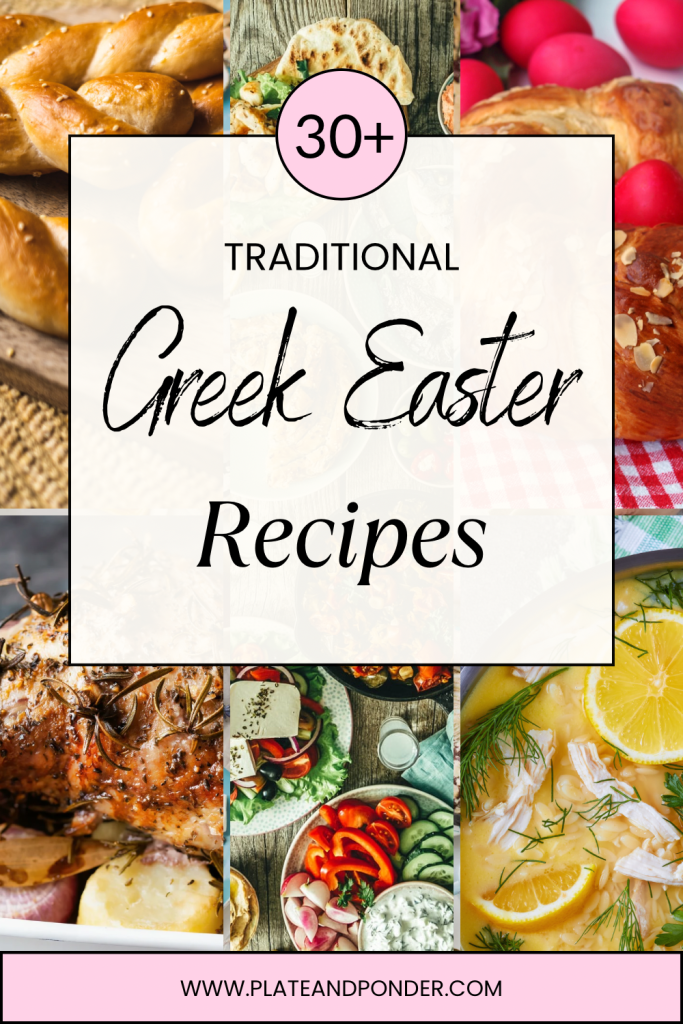
And then there’s bread: rich, sweet, and symbolic. Western tables might feature hot cross buns, marked with a cross and spiced with tradition. Orthodox families bake tsoureki or kulich, braided or towered, often scented with orange, mahlab, or cardamom, and shared as a sign of blessing.
Beyond these, other shared foods emerge in different forms. Cheese and dairy return joyfully after fasting, showing up in quiches, sweetened cheese spreads, or creamy desserts like paskha. In Western homes, ham is a common centerpiece—less symbolic than lamb, but rooted in seasonal availability and preservation traditions. Spring herbs and greens—like parsley, dill, or mint—feature across both tables, whether folded into pies, soups, or fresh salads. And no Easter is complete without sweets: from simnel cake and koulourakia to butter cookies and candied nuts, each bite carries a piece of family and place.
These foods aren’t just nourishment—they’re expressions of memory, faith, and the season’s sense of return.
Rituals and Community
Easter isn’t just a date on the calendar—it’s a rhythm of rituals that bring people together in meaningful ways, whether through solemn reflection or joyful celebration.
In Western traditions, Easter often begins with Good Friday services and culminates in Easter Sunday morning. Many churches hold sunrise services, symbolizing the empty tomb at dawn. Families gather for egg hunts, brunches, and springtime meals. The mood is light, cheerful, and often geared toward children—filled with baskets, bunnies, and sweets, all wrapped in pastel cheer.
Orthodox Easter moves to a slower, more immersive rhythm. The weeks leading up to Easter—Great Lent—are marked by fasting, prayer, and reflection. Holy Week intensifies this focus, culminating in the midnight Resurrection service on Holy Saturday. At the stroke of midnight, candles are lit, bells ring, and the congregation greets each other with “Christ is Risen!”—a moment of collective joy that breaks the long fast. From there, a feast follows, often lasting into the early hours of the morning.
Today, many Orthodox families adapt these traditions to fit modern life. Some observe the full fast; others focus just on Holy Week. The midnight service may be followed by a home-cooked meal rather than a large community gathering. In some homes, church is skipped entirely, but red eggs, lamb, and tsoureki still appear on Sunday afternoon as reminders of cultural identity.
Despite their differences, both traditions emphasize gathering, storytelling, and the deep comfort of returning to familiar patterns. Whether it’s a whispered prayer, a family recipe, or a shared laugh around the table, these moments remind us that celebration is as much about people as it is about faith.
The Table as a Universal Tradition
Across cultures, faiths, and even calendars, one thing remains constant: people gather to eat. The table is where tradition lives—whether passed down through recipes, rituals, or quiet repetition.
Despite theological differences, both Western and Orthodox Easter celebrations center on themes of light, life, and renewal. The return of spring becomes more than a change in weather—it’s a moment to reconnect with what sustains us. And more often than not, that reconnection happens over a meal.
The return of spring becomes more than a change in weather—it’s a moment to reconnect with what sustains us.
For some, Easter is deeply religious. For others, it’s cultural, seasonal, or simply an excuse to gather. But in all cases, food becomes a language—one that speaks of memory, gratitude, and belonging. Whether it’s a lamb roast, a loaf of tsoureki, or a store-bought chocolate bunny, what’s served reflects more than taste. It reflects where we come from, and who we’re coming home to.
Even for those who don’t celebrate in a religious sense, Easter (and spring more broadly) offers a natural pause. It invites us to mark the season in our own way, to share what we have, and to sit with others in celebration of the simple fact that life continues.
Conclusion
Whether it’s celebrated with solemn hymns, joyful feasts, or simply a quiet moment at home, Easter, both Western and Orthodox, offers a chance to pause, reflect, and reconnect. The rituals may vary, but the intention is shared: to mark the return of more sun light, the renewal of life, and the strength of community.
These traditions aren’t static; they evolve with time, travel, and the realities of modern life. Some are held closely, others reimagined. But even when belief fades or customs shift, the act of gathering around a table endures. Food, after all, is one of the oldest ways we know to say, “You belong here.”
So whether your Easter includes a midnight candle, a pastel egg hunt, or just a slice of sweet bread with someone you love, it carries something bigger than the moment. It’s a thread in a much older story that continues to unfold each spring in kitchens across communities around the world.
Food, after all, is one of the oldest ways we know to say, “You belong here.”