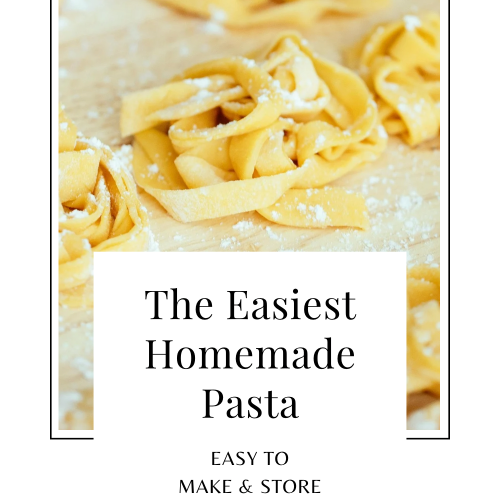
The Easiest Homemade Pasta
Make fresh, homemade pasta with just flour, eggs, and olive oil. Simple, beginner-friendly, and perfect for rolling into your favorite noodles—no machine needed!
Ingredients
- 2 cups all-purpose flour (or 00 flour for smoother texture)
- 2 large eggs
- 1/2 tsp salt
- 1 tbsp olive oil
Instructions
- Note: feel free to use the mixer if you have it, just add all your ingredients and mix until you have a springy dough ball.
- Make the flour well: Pour the flour onto a clean work surface (countertop or large cutting board). Use your hands or a measuring cup to create a wide well in the center, making sure the walls are high enough to hold the wet ingredients.
- Add wet ingredients: Crack the eggs into the well and add the salt and olive oil. Use a fork to gently beat the eggs, gradually incorporating small amounts of flour from the inner edges of the well. Go slowly to avoid breaking the flour wall too early.
- Form the dough: As the mixture thickens, use your hands to bring in more flour and knead it into a rough dough ball. You may not need all the flour, or you might need a sprinkle more if it’s too sticky.
- Knead the dough: Knead the dough by pressing it with the heel of your hand, folding, and rotating it. Continue for 8–10 minutes until the dough becomes smooth, elastic, and slightly tacky.
- Let it rest: Wrap the dough tightly in plastic wrap or place it in a covered bowl. Let it rest at room temperature for 30 minutes. This relaxes the gluten and makes the dough easier to roll.
- Roll out the dough: Divide the dough into smaller portions. Using a rolling pin or pasta machine, roll each piece into thin sheets, about 1–2 mm thick, dusting with flour as needed to prevent sticking.
- Cut into shapes: Use a knife, pizza cutter, or pasta cutter to slice the dough into your desired shapes—fettuccine, tagliatelle, or even lasagna sheets. You can also use pasta cutters for ravioli or stamp out fun shapes.
- Cook the pasta: Bring a large pot of salted water to a boil. Add the fresh pasta and cook for 2–3 minutes, or until tender but slightly firm (al dente). Fresh pasta cooks much faster than dried!
- Serve immediately: Drain and toss with your favorite sauce, such as browned butter and sage, classic marinara, or a creamy Alfredo.